


When manufacturing durable, lightweight, and dimensionally stable industrial components, most engineers only focus on surface smoothness and overall size tolerance, ignoring invisible structural defects that lead to premature failure, air leakage, pressure leakage, and frequent equipment downtime. Traditional casting processes frequently produce pores, shrinkage cavities, uneven wall thickness, and low structural density, problems that cannot be detected by simple appearance inspection but directly shorten service life and increase long-term maintenance costs. Choosing reliable aluminum alloy die casting parts eliminates these latent risks and delivers stable performance under high-temperature, high-pressure, and frequent vibration working conditions.
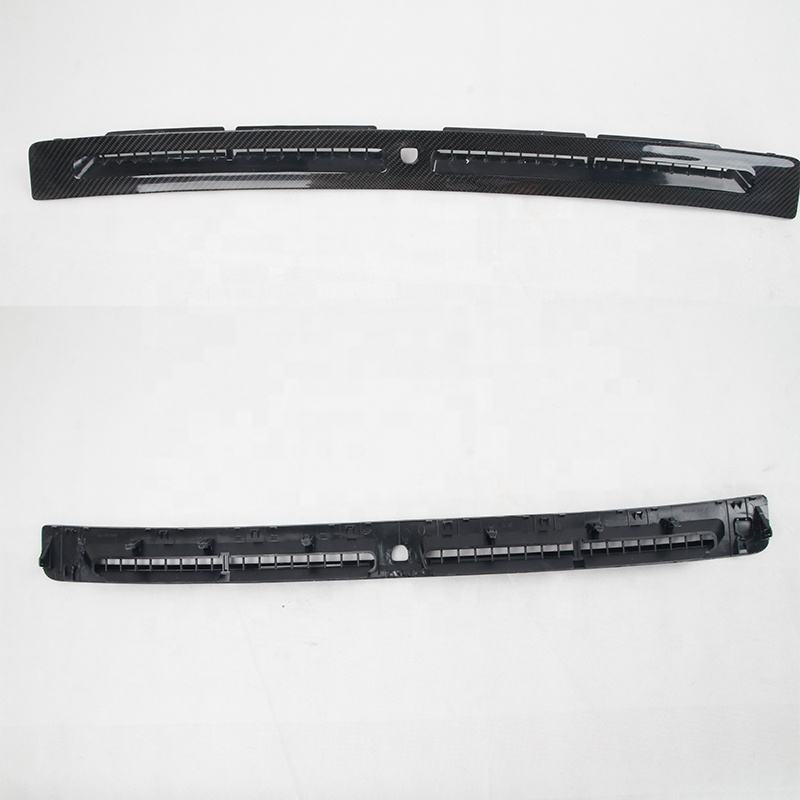
Many purchasers mistakenly believe all die-cast aluminum parts perform identically, only comparing unit prices without analyzing material ratio, mold precision, and post-processing technology. Low-cost rough castings seem economical at first purchase, yet they suffer from poor airtightness, easy deformation after load bearing, and weak corrosion resistance in humid and corrosive environments. Professional customized die casting solutions from Sidiff Precision Parts Co. adopt standardized alloy formulas and strict mold machining accuracy, matching actual working conditions to avoid hidden safety hazards caused by mismatched material properties.
Internal porosity remains the most overlooked core problem in aluminum die casting products. Tiny internal holes cannot be seen with naked eyes, yet they cause oil leakage, gas leakage, reduced pressure resistance, and fatigue cracking after long-term operation. Pores also weaken overall mechanical strength, making parts break suddenly during high-speed operation and triggering unexpected production accidents. High-density precision die casting technology greatly reduces internal pore rate, improves structural compactness, and ensures consistent pressure resistance and sealing performance across batch products.
Wall thickness inconsistency is another deep-seated issue affecting product durability. Uneven cooling during traditional casting causes thick areas to shrink and thin areas to crack, resulting in unbalanced stress distribution. When parts are assembled and operated for a long time, deformation and fracture easily occur at stress concentration positions. Advanced integrated die-casting molding controls uniform wall thickness precisely, optimizes stress distribution, and greatly improves impact resistance and fatigue resistance of finished components.
Surface treatment quality directly determines service life and environmental adaptability, yet it is often simplified by ordinary casting factories. Unqualified anodizing, painting, and passivation lead to rapid oxidation, rust, wear, and peeling on aluminum surfaces outdoors or in harsh industrial environments. Professional multi-stage surface treatment processes enhance wear resistance, corrosion resistance, insulation, and aesthetics, keeping parts stable in low temperature, high humidity, dust, and chemical corrosive environments for years without performance degradation.
Common Pain Points & Corresponding Advantages of Aluminum Alloy Die Casting Parts
| Typical User Problems | Root Causes | Optimized Solution Effects |
|---|---|---|
| Air & oil leakage of assembled parts | High internal porosity, poor sealing precision | Ultra-low porosity casting, precise dimensional tolerance ≤±0.02mm, stable airtightness |
| Easy deformation under high load | Unreasonable wall thickness, low alloy density | Optimized structural design, high-strength aluminum alloy, uniform stress bearing |
| Short service life & frequent replacement | Rough mold accuracy, inferior surface anti-corrosion treatment | High-precision mold molding, multi-layer anti-corrosion surface finishing |
| Large batch size deviation | Unstable casting process control | Full-process quality inspection, consistent batch size and performance |
| High assembly difficulty | Unstandardized contour accuracy, burr residue | Deburring finishing, standard size matching, seamless assembly |
Batch stability is a key indicator that directly affects mass assembly and production efficiency. Small-scale scattered casting workshops cannot maintain consistent parameters for melting temperature, injection pressure, and mold cooling, leading to obvious differences between first-piece and bulk products. Unqualified parts mixed in bulk goods cause assembly jams, repeated debugging, and overall production line efficiency. Mass standardized precision die casting adopts automatic constant-temperature production, each product undergoes dimensional inspection, airtight testing, and strength testing to guarantee zero difference in batch performance.
Aluminum alloy die casting is widely applied in automotive accessories, automation equipment, hydraulic components, communication housings, motor shells, and new energy structural parts. Different industries have distinct requirements for pressure resistance, weight, heat dissipation, and insulation. Blindly using universal parts will cause mismatched heat dissipation, insufficient load capacity, and incompatible assembly interfaces. Custom molding according to actual application scenarios achieves targeted performance matching, balancing lightweight, high strength, heat conduction, and assembly compatibility.
Long-term operation cost far exceeds initial procurement cost. Low-quality die castings require frequent maintenance, replacement, and shutdown repairs, increasing labor costs and production loss. High-precision finished parts reduce failure rate, extend maintenance cycle, and greatly lower comprehensive operating costs throughout the product life cycle. Reasonable selection of die casting accessories is not short-term cost saving, but long-term stable operation planning for mechanical equipment.
In summary, excellent aluminum alloy die casting parts rely on precise mold design, reasonable alloy ratio, strict defect control, standardized post-processing, and full-link quality testing. Solving invisible internal defects rather than only optimizing appearance indicators is the core logic to select high-quality industrial casting components. Stable precision casting products effectively avoid hidden faults, extend component service life, and support safe, efficient, and continuous operation of various industrial machinery and precision equipment.